Research
From blocks to buildings.
From damage observed in Zagreb to models of masonry behaviour and the probability of future damage.
The starting point / Zagreb
What damage reveals.
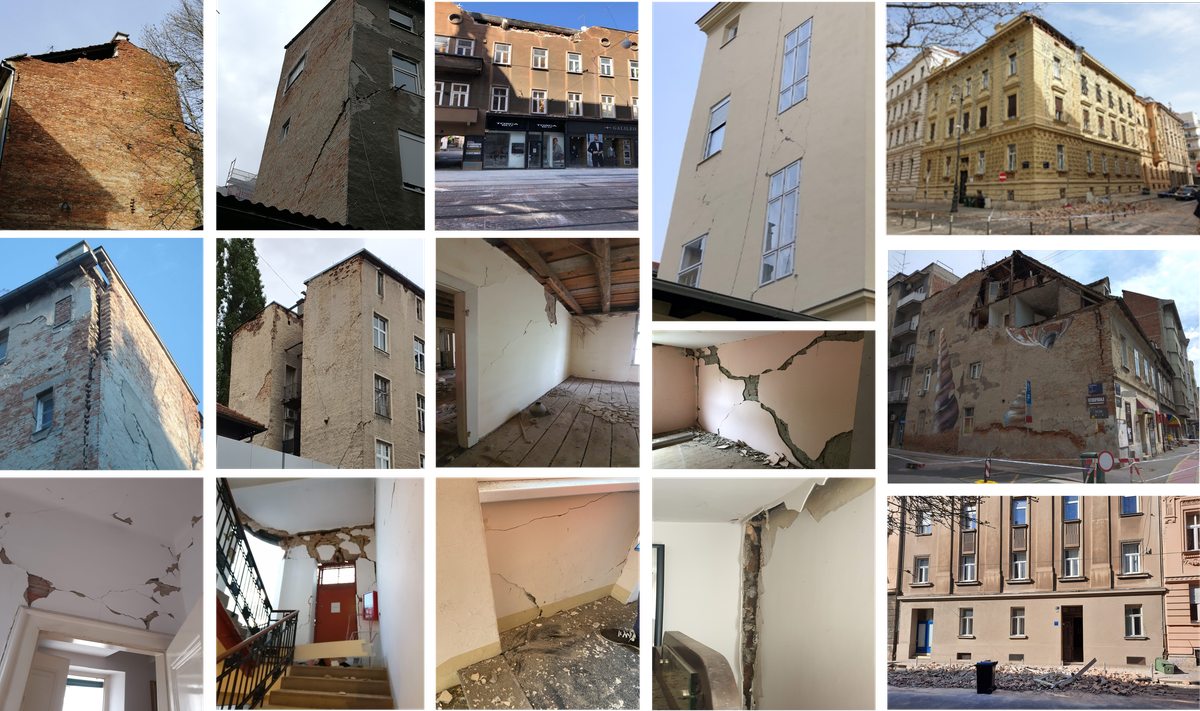
Cracks, separated walls and local collapses are different parts of a building’s response to an earthquake.
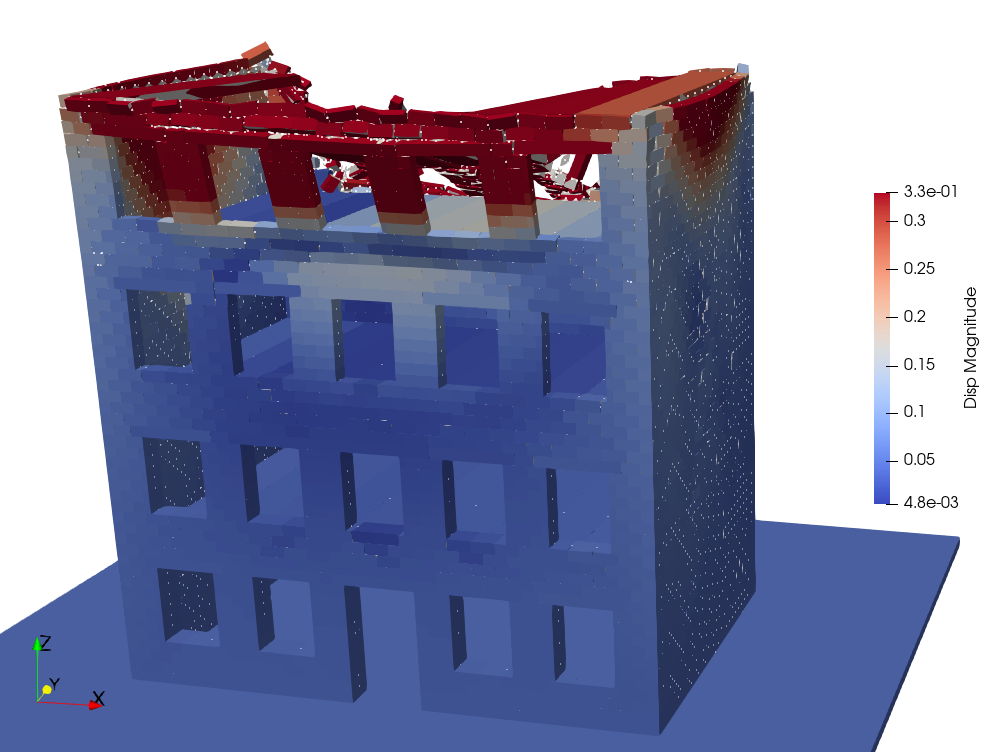
The CCEE damage assessment photographs document these effects in downtown Zagreb. They bring the research question into focus: how can the movement and interaction of masonry blocks help explain damage at the scale of a building?
FragMENTS builds on the Phase XI study in Zagreb to connect local failure mechanisms with seismic fragility assessment, including the response of previously damaged buildings.
The problem
Three questions. One connected approach.
To connect observed damage with seismic fragility, the project addresses three linked modelling challenges: how to represent masonry, calibrate its contacts and capture interacting failure mechanisms.
01
Turning a wall into blocks
There is no validated, transferable way to simplify brick-and-mortar walls into rigid blocks — existing discretisation choices stay heuristic, and sensitive to block size and pattern.
02
Calibrating how they interact
How blocks grip, slide and separate under dynamic loading is usually tuned ad hoc, not calibrated systematically across scales and loading conditions.
03
Keeping collapse modes coupled
In-plane and out-of-plane failure are typically assessed separately, and pre-existing earthquake damage is rarely built into the starting state of a fragility analysis.
Research
Research programme
Three work packages turn these questions into a research programme: build reference models, calibrate and validate their behaviour, then derive mechanism-based fragility relationships.
Model generation & discretisation
Benchmarks & scope
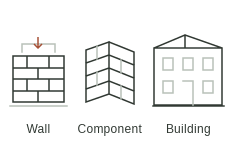
Review tests and select representative masonry cases.
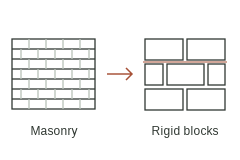
Homogenisation
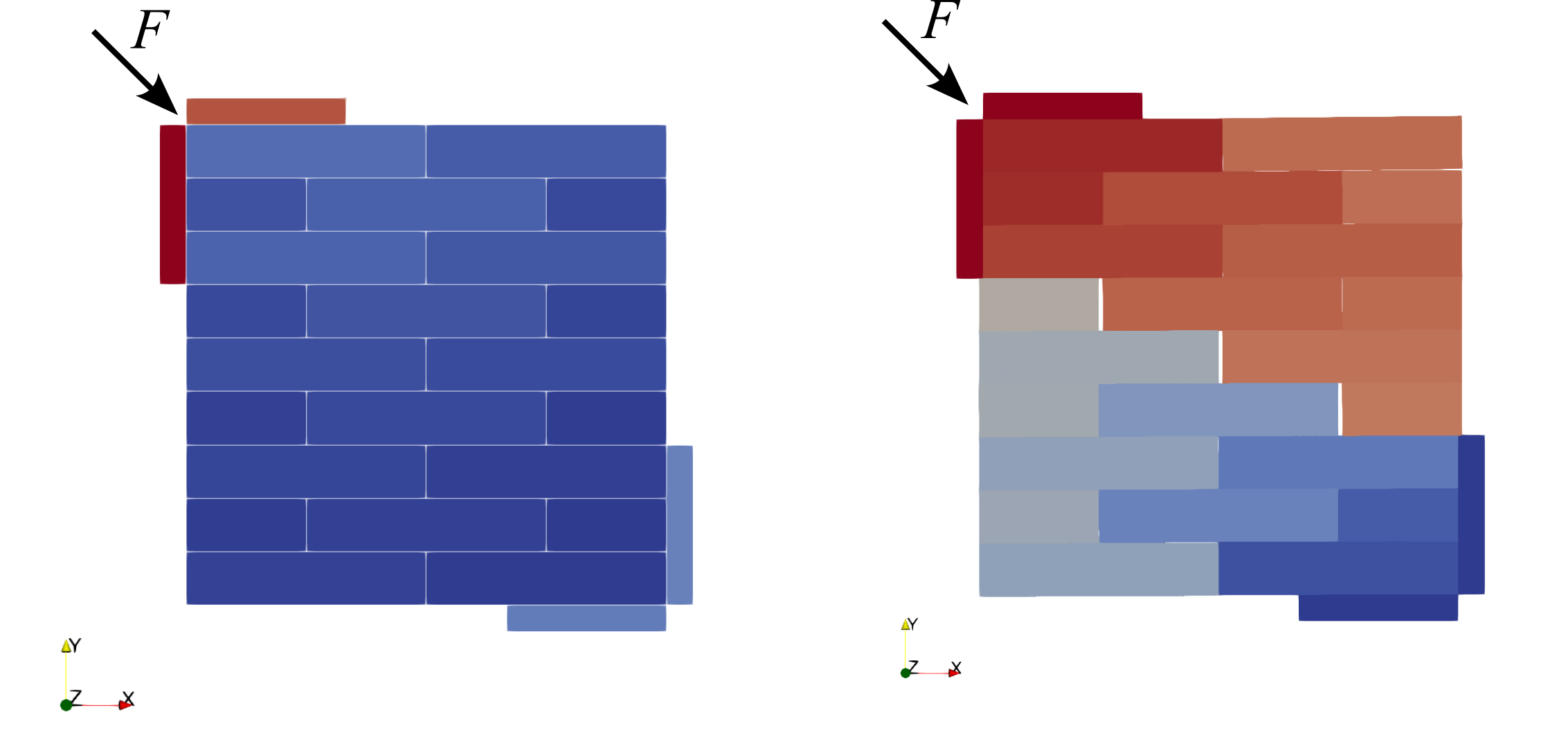
From brick–mortar assemblies to equivalent rigid blocks.
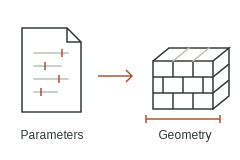
Parametric NSCD models
Automate geometry and reproducible LMGC90 inputs.
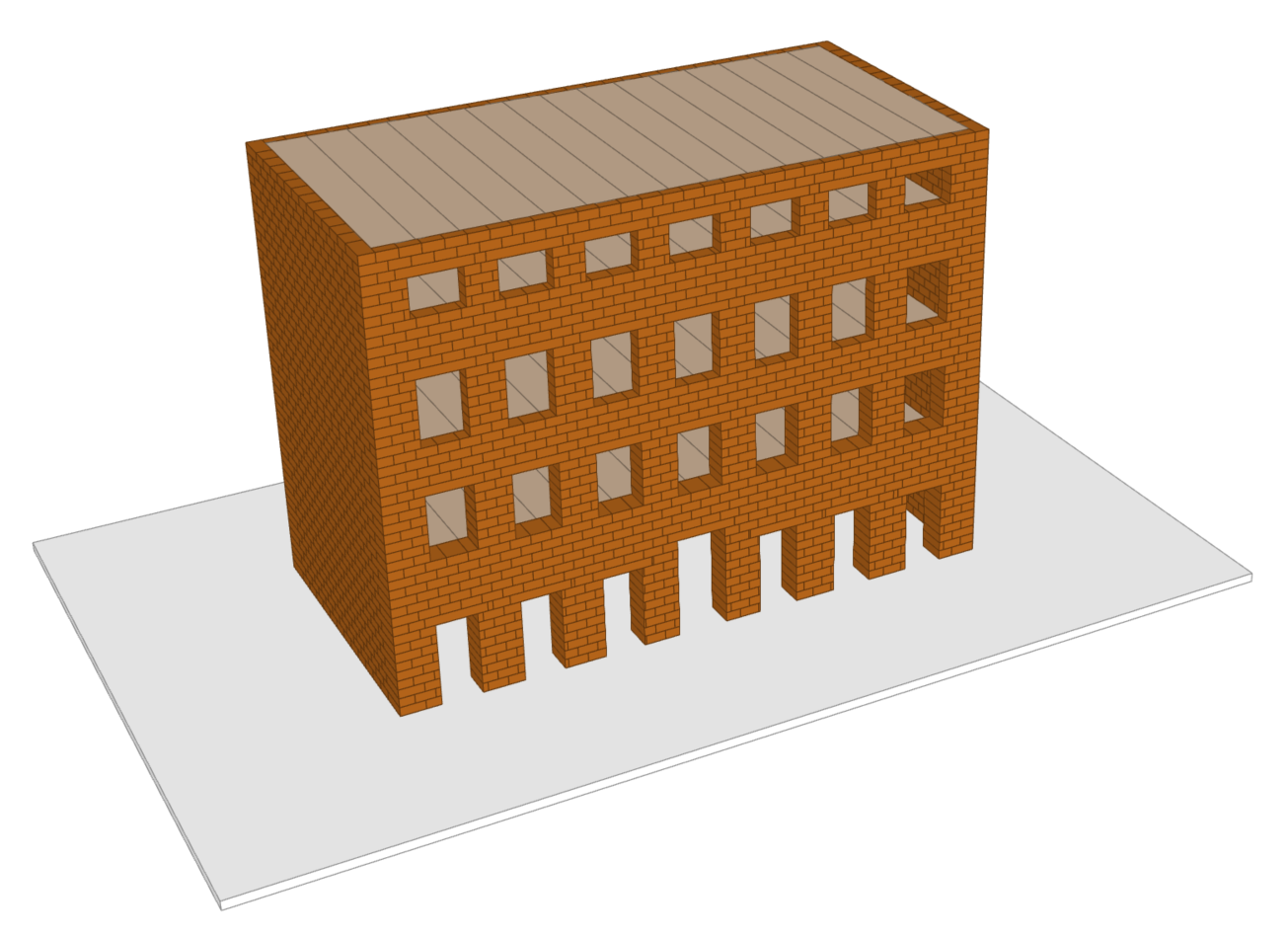
Reference models
Mechanically consistent, simulation-ready models.
Planned deliverable · WP1
A reproducible NSCD modelling framework with homogenised rigid-block discretisation and simulation-ready reference models.
To WP2 · reference models
Calibration & multiscale validation
Benchmark definition
Component- and building-scale calibration targets.
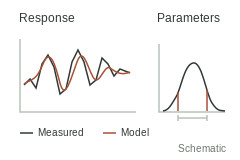
FCZM calibration & uncertainty
Evolutionary algorithms and sensitivity analysis.
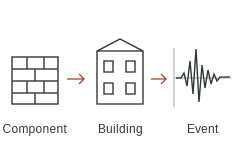
Multiscale validation
Component, building and event response, including damaged states.
Planned deliverable · WP2
A calibrated and validated contact-parameter domain, uncertainty bounds and a documented multiscale validation protocol.
To WP3 · validated models & uncertainty
Mechanism-driven fragility development
Mechanism-based EDPs & damage states
Coupled in-plane and out-of-plane failure mechanisms.
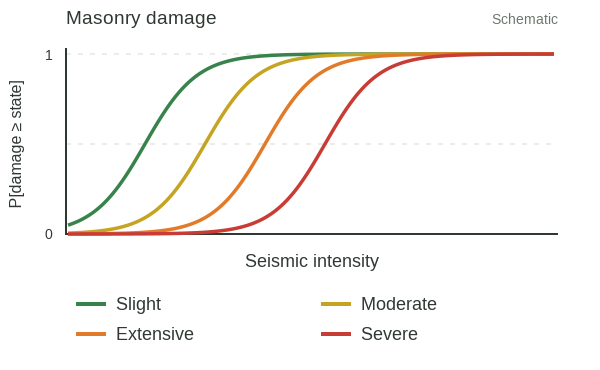
Damage-conditioned fragility
Multiple-stripe analysis of intact and previously damaged models.
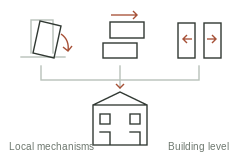
Life-safety aggregation
Combine critical local mechanisms into a building-level indicator.
Planned deliverable · WP3
Mechanism-based, damage-conditioned fragility functions and a reproducible NSCD-to-fragility workflow with a building-level life-safety indicator.
Building-level seismic assessment
Model images: Phase XI study, the research preceding FragMENTS. Line diagrams are schematic illustrations, not project results.
NSCD · Non-smooth contact dynamics FCZM · Frictional cohesive zone model EDP · Engineering demand parameter
36 months of connected research
The work packages overlap; model development, validation and fragility assessment inform one another.
Month 1
12
24
36
WP1
WP2
WP3
Grounded in real buildings
From the laboratory to the city.
The framework will be tested against measured behaviour at component, building and earthquake-event scales.
Component
Laboratory shear- and diagonal-compression tests from the CCEE–EPFL experimental campaign, capturing cracking patterns and stiffness degradation.
Building
A full-scale shake-table test on a historic masonry building, carried out jointly with EPFL, providing global dynamic properties and drift patterns.
Event
Vibration measurements from real buildings before and after the 2020 Zagreb earthquake, compared against the damage that was actually observed.
Previously damaged buildings
Understanding residual capacity
The project introduces damage-conditioned initial states to assess how pre-existing damage affects a building’s residual capacity and its fragility under subsequent seismic loading.